



CHIPLEY, FL
Neel-Schaffer is not just a place to work, it is a promise of a living, dynamic environment where people collaborate, innovate, build enduring relationships, excel, and grow professionally in a strong culture of ownership.
Do you have the desire to learn, the drive to excel and thrive in an engaged, client focused environment? If so, we might have just the right opportunity for you.
Neel-Schaffer is seeking applications from qualified candidates for the role of RCI Deputy Project Manager/ Senior Engineer Technician to join the growing CEI staff in our fast-expanding firm. This position is based in our Chipley, FL, Office.
Neel-Schaffer is an Engineering News-Record Top 500 Engineering, Planning and Construction Management firm that operates throughout the Southeastern United States. It offers a competitive salary and excellent benefits, including health care and a matching 401(k) savings plan.
Responsibilities of an FDOT RCI Deputy Project Manager/Senior Engineer Technician:
Determine Roadway Assignment and Prepare Work Scope: Each day begins by identifying the roadway segment assigned for review or update within the FDOT Roadway Characteristics Inventory (RCI) database.The technician reviews prior inventory records, verifies roadway limits, and determines whether the task involves a full re-inventory, partial update, or quality control check. Understanding the project scope ensures that all subsequent data collection and updates align with FDOT standards and inventory accuracy requirements.
Conduct Pre-Inventory Research and Data Gathering: Prior to fieldwork, the technician performs a detailed pre-inventory analysis using digital resources such as Google Earth, FDOT’s RCI GIS Database, and – when necessary – county property appraiser websites or other geographic data tools. This step establishes a preliminary understanding of the roadway layout, identifies potential feature changes, and aids in planning an efficient inventory route. The technician also sets up a file system for the project to maintain organized records throughout the process.
Develop Project Mapping and Initial Roadway Tracing: Using aerial imagery and GIS mapping tools, the technician traces the project limits on Google Earth or similar platforms to visualize & measure the entire roadway corridor. They print or export a Straight Line Diagram (SLD) to compare against the previous inventory, noting any apparent changes in roadway configuration or features. During this overview, the technician checks for visibility limitations such as heavy tree cover or outdated imagery that may impact remote assessment and field verification.
Compile Feature List and Inventory Plan: After reviewing the SLD and aerial imagery, the technician prepares a comprehensive list of roadway features that will require collection or verification in the field. Common features include Feature 213 (Auxiliary Lanes), Feature 217 (Sidewalks), Feature 216 (Bike Lanes/Sidewalks), Feature 271 (Guardrail), and Feature 118 (HPMS). The list serves as a structured field guide to ensure that all relevant roadway components are documented accurately and efficiently.
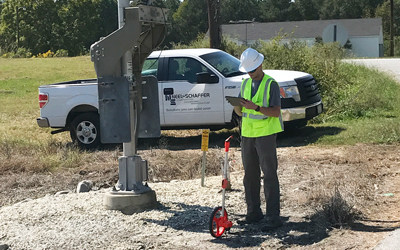
Perform Field Inventory and Verification: The technician conducts field visits to verify and collect updated roadway characteristics. Fieldwork involves measuring with a DMI and documenting all applicable features while confirming that the existing database accurately represents current conditions. Depending on the roadway and imagery quality and date, some pre-inventories may cover everything primarily in-office with very little field work, while others require extensive on-site verification.
Update and Correct RCI Database Entries: Upon returning to the office, the technician reviews all collected field data and inputs necessary corrections or updates into the FDOT RCI system through RITA (Roadway Information Tracking Application). This includes verifying feature codes, adjusting data, and ensuring consistency with current FDOT data standards. The technician double-checks for accuracy before submitting the updates for review.
Prepare and Finalize the Straight Line Diagram (SLD): Once the RCI database has been updated, the technician generates a new Straight Line Diagram reflecting the latest roadway information. This process involves correcting visual errors, aligning mile markers, and verifying that all features are accurately represented. The finalized SLD is printed and reviewed internally, then submitted to a supervisor or FDOT project manager for quality assurance and final approval.
MINIMUM REQUIREMENTS:
- Current Driver License.
- 5-plus years of experience in RCI, HPMS, and Data Collection.
- Proficient in Bluebeam and/or Adobe Illustrator.
Equal Opportunity Employer
"*" indicates required fields